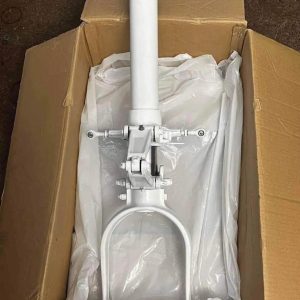
The Cessna Nose Gear Strut Assembly may serve as a replacement, overhaul, restoration, maintenance, or spare-inventory component when its exact part number, configuration, condition, and applicability are confirmed.
Accurate use of these keywords improves search relevance without implying universal compatibility across the Cessna product line.
The Cessna Front Landing Gear Assembly, Aircraft Nose Gear Strut, Aircraft Nose Landing Gear Assembly, and Cessna Shock Strut Assembly terms describe related ground-support and impact-management components.
A Cessna Nose Gear Shock Absorber may use fluid, gas pressure, mechanical movement, or another model-specific arrangement to manage landing and taxi loads.
General Aviation Landing Gear Parts listings should provide exact identification, condition, measurements, records, and included components for professional evaluation.
Understanding the Cessna Nose Gear Strut Assembly
The assembly should be identified through its Cessna part number, casting or forging numbers, serial markings, aircraft applicability, dimensions, configuration, photographs, maintenance records, and available illustrated-parts information.
Missing components can significantly affect total project cost and installation planning.
Evaluating Landing Gear Structural Responsibilities
Actual load distribution depends on aircraft weight, center of gravity, tire pressure, landing technique, surface condition, and aircraft configuration.
Any evidence of previous impact should be disclosed and investigated.
Understanding the Cessna Shock Strut Assembly
Complete functional evaluation is more reliable than visual appearance alone.
Excessive compression, insufficient extension, rapid rebound, leakage, sticking, or uneven movement can indicate servicing, seal, internal-surface, alignment, or load concerns.
Understanding the Cessna Steering Strut Assembly
Correct geometry supports more consistent taxi and landing-roll control.
Professional adjustment protects the Cessna Steering Strut Assembly and connected components.
Verifying Illustrated Parts Catalog Information
Two aircraft with similar outward appearance may use different struts, forks, cylinders, steering features, hardware, or mounting arrangements.
Supplemental modifications, replacement forks, wheel conversions, tire changes, steering alterations, and airframe repairs can affect compatibility.
Evaluating the Cessna Nose Strut Body
Detailed inspection supports reliable Aircraft Nose Gear Strut evaluation.
The cylinder bore, piston diameter, and relevant clearances may require professional measurement.
Understanding Strut Seal Maintenance
Repeated wiping without correcting the source does not constitute proper repair.
Any internal maintenance should be documented with parts and procedures used.
Maintaining Protective Finishes
Corrosion may develop on external surfaces, inside bores, around fasteners, beneath paint, near mounting points, or within neglected fluid areas.
Fresh paint may improve appearance while concealing corrosion, filler, weld repairs, or damaged surfaces.
Inspecting High-Stress Areas
The assembly should be inspected for cracks, bending, twisting, damaged welds, distorted mounting features, and impact marks.
Hard landings, runway excursions, tow-bar incidents, shimmy, collapsed tires, obstacle contact, and freight damage can affect the nose gear even when external deformation appears minor.
Understanding Included Landing Gear Components
Fork alignment influences wheel tracking, steering response, tire wear, and clearance around fairings or nearby components.
Wheel bearings, seals, spacers, and retaining hardware should be evaluated separately rather than assumed more info serviceable because they are attached to the assembly.
Inspecting Landing Gear Articulation Components
Bushings, bolts, washers, bearings, and attachment holes should be inspected for wear, elongation, corrosion, looseness, and inadequate lubrication.
Pivot points should move freely without binding while remaining within acceptable play limits.
Evaluating Wheel Alignment and Steering Play
Nose-wheel shimmy can result from worn bushings, loose torque links, tire imbalance, wheel-bearing play, incorrect tire pressure, steering looseness, alignment issues, or structural wear.
Uneven tire wear can indicate alignment concerns, fork distortion, bearing issues, incorrect pressure, steering problems, or repeated side loading.
Avoiding Incorrect Landing Gear Servicing
Incorrect fluid, contamination, trapped air, overpressure, or underpressure can affect extension, damping, leakage, ground clearance, and structural loading.
Proper servicing protects the Aircraft Landing Gear Strut and surrounding structure.
Distinguishing Inspection from Overhaul
A seal replacement or exterior repaint does not necessarily constitute a complete overhaul.
Complete records strengthen the commercial value of the Cessna Replacement Nose Gear.
Cessna Front Gear Condition Review
The buyer should obtain enough information for a qualified aviation maintenance professional to evaluate the assembly.
- Resolve identity, applicability, condition, and package-completeness questions before payment.
- Arrange qualified landing-gear evaluation whenever structural condition, dimensions, repair history, compatibility, or documentation remains uncertain.
- Confirm the sales invoice, payment protection, packaging method, freight insurance, inspection period, return terms, and stated assembly condition.
Safe Freight Handling Procedures
The chrome or polished piston area should receive protective wrapping that prevents impact and contamination without trapping moisture.
Careful freight preparation reduces damage to the Cessna Landing Gear Assembly.
Storage and Preservation Before Installation
During storage, the strut should remain clean, dry, supported, labeled, and protected from impact, moisture, chemicals, dust, and uncontrolled handling.
Identification records, inspection tags, hardware, seals, and supporting documents should remain associated with the correct assembly.
Preparing for Ground-Handling Checks
Surrounding structure should be inspected for cracks, corrosion, deformation, worn holes, and previous repair before installing the replacement assembly.
Fasteners should be installed, tightened, secured, and documented according to applicable procedures.
Taxi checks should begin conservatively and should monitor shimmy, pulling, vibration, abnormal noise, leakage, and steering behavior.
Maintaining the Cessna Nose Landing Gear
Small leaks, corrosion, looseness, tire wear, damaged coatings, unusual noise, or shimmy should receive timely attention.
Preventive care protects the aircraft, occupants, and landing-gear components.
Landing Gear Ownership and Installation Costs
Honest product information strengthens buyer confidence and reduces disputes.
Commercial evaluation should focus on verified suitability rather than promotional claims.
Final Thoughts on the Cessna Nose Landing Gear Strut
For a properly matched Cessna aircraft, the assembly can support dependable ground handling when professionally inspected, serviced, installed, and maintained.
The assembly should be evaluated with the receiving aircraft’s structure, steering, wheel, tire, alignment, servicing, and installation requirements in mind.
Whether maintenance teams are sourcing a Cessna Steering Strut Assembly, Cessna Replacement Nose Gear, or General Aviation Landing Gear Parts, professional inspection and installation should precede operational use.
With prompt attention to leakage, scoring, corrosion, shimmy, tire wear, loose bushings, steering play, impact events, and abnormal compression, the installation can preserve its operating potential.